Search This Blog

Thursday, July 8, 2010

Musk Mania

How lucky am I?  I am the recipient of 10 musk samples from fellow perfumers as a participant perfumer in the Mystery of Musk project.  The project involves eleven natural perfumers from all over the world.  Each of us blending our version of a musk perfume in a short time period, then submitting the perfume to critics, bloggers and fellow participating perfumers.  I have been sampling perfumes from some of the finest, most original perfumers out there.  I spray and sniff and muse.  The variations on the theme of musk are amazing. 
Some of the perfume samples I've received are pretty innocent florals with a light musky dry down.  Some are "hit you over the head" dark blends that scream musky, earthy, dangerous.  Some are unlike anything I've ever smelled (Dionysus I'm talking to you.)
I've always been a fan of sampling other perfumers creations.  I'm often surprised when speaking with perfumers who admit to not sampling other natural perfumes.  By sampling I learn many things.  I learn something about the perfumer, their partialities, their strengths.  Are they drawn to woody earthy blends?  Do they excel at sparkling florals?  What is their best selling scent?  I marvel at how some samples last forever.  I pour over the list of perfume notes trying to discern how the perfumer created such longevity.  I discover new botanicals I've never worked with.  Sampling perfumes is a great barometer for any perfumer.  Are my blends stronger, weaker, sweeter, louder, softer?  Compare and contrast, sniff and muse.  Admire and contemplate.
That being said, I'd like to post my thoughts on my fellow perfumers Musk creations.  Each is highly original and no two are remotely similar.  I'd like to highlight this fact as some folks inexperienced with natural perfumes tend to lump all natural perfumes in together stating they all smell the same.  Au contraire!  Considering each perfumer was given the same task, time frame and suggested botanicals I find it amazing to note the differences with each creation.  This is a stark contrast to the mainstream perfume industry which of late seems to be releasing the same syrupy fruity floral scent over and over again.
Tallulah B.2 by A Wing & A Prayer Perfumes: I really love this scent.  It's pretty, feminine, floral, with a soft vanilla-musk baby powderish drydown.  I believe this fragrance would be a good introduction to natural perfumes for a wearer accustomed to traditional synthetic fragrances.  It's very clean and free of any dark, musty earthy notes that can scare off some natural perfume newbies.  Tallulah B. also has good staying power and seems to be a what I can only describe as a "skin scent" that lasts for hours.
The color of Tallulah B.2 is crystal clear (!) and causes me the dreaded perfumer's envy as my blends are darker in color.  Hmph.  Is it a crime to like oakmoss (dark brown), pink lotus (orange) and violet leaf (green)?  On a side note, the crystalline color of the beautiful scent has prompted me to try and create a clear perfume.  I sat down at my blending table and after much examination pulled approximately seven bottles of oils and absolutes from my extensive collection . . . gulp.  Dear Jane, how did you do this?  Kudos.
Craving :  I was eagerly waiting to receive this delectable scent from down under once Ambrosia let it slip that it was a gourmand creation.  Craving was worth the wait!  Craving impressed me as I found it:
1. gourmand but not overly sweet; a sophisticated edible
2. unisex (hard to do with ingredients like cocoa and hazelnut)
3. lasted for hours
To me Craving smells like coffee, cocoa, toasted hazelnuts, honey, maple syrup and smokey vetiver.  I enjoyed wearing this scent, and kept sniffing every few seconds noting the subtle changes.  I appreciate the linear notes of Craving.  This is not a scent that changes drastically as one wears it and I appreciate this, as I know the difficulty involved with creating a natural perfume that is seamless throughout the stages of drydown.  Craving screams autumn to me.  I want to wear it on a cool fall evening, while taking a walk, listening to the leaves crunch underfoot, and smelling the first faint whiffs of chimney smoke.  Definitely appropriate for both men and women.


Kewdra by Anya's Garden:  Disclaimer: I am biased against kewda, a.k.a. pandanus flower, a.k.a. psychotically strong sharp floral that overpowers everything I blend with it even when heavily diluted, a.k.a umm, I think you get the idea.  To be fair, I've only sampled one kewda absolute from Liberty Naturals.  Maybe there's a kewda out there I'd like better?  I'm not sure how Anya tamed the kewda beast, but she did.  This scent grows on me more and more each time I try it.  Anya seems to have enhanced the elusive velvety almost chocolate note that kewda has, something I try to do each time I work with this botanical and never succeed.  Not that Kewdra is a gourmand scent, but there's something lurking underneath there that's elusive, soft and yummy.  Normally I don't care for ambergris either, but I do in Kewdra.  I think I can smell it, and I LIKE it.  I found Kewdra risky, completely original and full of moxie.  The drydown of Kewdra is my favorite part.  It's delectable and very long lasting. Kewdra makes me want to don a low-cut bohemian dress with lots of gold bangles and eyeliner on a sexy date for Indian food and flirt with the waiter when my husband goes to the restroom.

Dionysus by Lords Jester:  This is one crazy scent.  There's an intriguing yeasty top note that I can't get enough of.  It's odd and I like it.  It smells like malt or brewers yeast.  I can then smell honey and a vegetable aroma, then comes an animal musky note.  Like goats or sheep.  Growing up on a farm with hippies in the middle of nowhere (Oh alright, it was a commune) my father was partial to pouring warm freshly squeezed goats milk on our morning cheerios.  Needless to say, my little brother and I were no longer hungry or amused by this turn of events and dreaded the warm musky invasion into our morning cereal.  Consequently, I'm not wild about the smell of goats as it brings grisly flashbacks of morning cereal gone wrong.  That being said, I think some perfumers such as Adam and Anya successfully use this animalistic note in their perfumes.  For me Dionysus is a roller coaster of smells and memories in the coolest way possible.  Definitely unisex and unique.  I'm off to to my happy place now where the milk is cold, from cows and my cheerios smell of oats.

Drifting Sparks by Artemisia Natural Perfumes: There's something oceanic about Lisa's Drifting Sparks perfume that I love.  It's a clean floral woody scent, with a salty musk that weaves in and out of the fragrance.  I smell notes of lightly smoked woods and salt water and sunscreen.  Drifting Sparks reminds me of the New England sea coast, with it's untamed rocky beaches, cold water and crashing waves.  The fragrance lasted quite awhile on my skin, and each time I sample this fragrance I become more and more impressed.  Lisa mentioned she used the blossoms of the nyctanthesus aboritistus in Drifting Sparks and I'm unfamiliar and now curious about this botanical. 


Sensual Embrace by JoAnne Bassett:  Very refined, sophisticated and french.  I smell the clementine, rose and tobacco and it blends beautifully.  I find it very clever that Sensual Embrace contains tobacco as it lends itself perfectly to the 1920's theme of the Mystery of Musk project.  I inhale Sensual Embrace and I'm instantly transported to the leathered backseat of a car, where an elegant flapper lounges sullenly puffing a cigarette in a long black holder.  Her earrings flash in the dusky light as she pouts waiting to arrive at the dimly lit jazz club where she can imbibe her first gin fizz of the evening.


Grains de Paradis by Sharini Parfums Naturels: I'm in LOVE!  Grains de Paradis is amazing.  I can't stop smelling myself.  Nicolas made this creation in two strengths.  It's with deep sadness I write that I only received the first, lighter version.  When the second envelope from France arrived, I gleefully pulled it from the mailbox only to find it had ripped and the precious, intense version of Grains de Paradis was gone, lost forever.  I believe there is a postal carrier here in Rhode Island who smells divine!

Out of all the musk samples I received, this one smelled most like the traditional musks I am familiar with.  It has a Jovan white musk type aroma and I mean this is the best possible way.  It's a compliment.  I was surprised that such an aroma I associate with synthetic musk perfumes could be created with naturals.  Strangely, the first time I tried the perfume I found it a beautiful crystalline musk.  The second time I tried the perfume, it smelled less musky and more floral and the cherry notes seemed more predominate.  Either way, it's lovely.  My green eyed monster reared it's ugly head as I realized it would be nearly impossible for me to create something similar myself.  The more I read about the labor intensive process involved with creating this scent the more discouraged I became.  I realized I must complete the following checklist in order to even come mildly close to recreating this amazing perfume: 

1. Promptly move to France
2. Pick bushels of wild cherries in the Herault valley for tincture
3. Use no absolutes (what? How the heck . . . ?)
4. Create enfleurage pomades from scratch during a month long harvest of genet blossoms.  Blossoms will be hand picked by myself and partner, followed by an 18 step enfleurage process. 

See?  No problem at all.
Grains de Paradis has above average sillage and a feminine musky, slightly floral/fruity aroma.  I adore this perfume.

Musk Eau Natural by Parfums des Beaux Arts:  This potent beauty packs a musk wallop at a 30% concentration and I appreciate it!  I smell ambrette, beeswax and angelica (?) and the scent transports me back in time.  For some reason Musk eau Natural makes me think of Hawthorne's novel The Scarlet Letter.  Maybe it's the beeswax, or the sexy musky aroma that can only be smelled at very close range.  There's something taboo or forbidden about Musk eau Natural that I can't put my finger on.

Verdigris by Bellyflowers: I smiled when I inhaled the complex aroma of Verdigris.  I have been working on a similar blend, with similar components for the last year.  However, in the case of Verdigris, Elise has created a masterpiece whereas my various blends languish in sample bottles with notes reading "too sharp" or "too much sage, add more orris." I love the ambergris here and the smooth, suppleness it adds to the bright clary sage and lavender.  I detect a light sweet musk in the base.  I find Verdigris a unisex green fragrance, which I enjoy wearing.

Temple of Musk by Strange Invisible Perfumes:  This sample starts out with a blast of black currant bud, followed by a slightly medicinal note of myrtle, slowly the aroma of a soapy ambrette arises, followed by a slight sweetening.  This is the cleanest musk I've ever smelled.  I know a "soapy ambrette note" makes no sense, but I swear it's there.  I found this perfume interesting as I've not smelled such a combination before.  I always think of "dirty" when I think musk and it was refreshing to smell something so totally unexpected.  

Whew.  Done for now.  Look for my next post coming soon titled "Halitosis or Heavenly? What To Do When Critics Pan Your Perfume & Why Gin & Tonic is Not The Answer"  :)

Monday, June 28, 2010

Musk Nouveau has launched

As a participant in the Natural Perfumers Guild Mystery of Musk Project, I have been busy creating natural musk perfumes.  As most natural perfumes get better as they age, I set about creating different versions of perfumes as soon as I was chosen to participate so I would have as much time as possible to modify my final scent before submission to critics, bloggers and fellow perfumers.  Out of a number of different musky perfumes I created, I settled on three different musk perfumes that I felt were innovative and pleasantly musky.  I had a difficult time deciding which of these three perfumes to submit for review.

The first blend I called Celadon Musk and was based on sage absolute which I've always felt had a musky earthy note.  I created many different versions of this musky grassy sage perfume, the best of which highlighted sage and lime.  It is zesty, green and musky.  After much deliberation, I decided against submitting this version.  I found the sage overpowering.  After wearing this Celadon Musk for a time all I could smell was sage.  On a positive note, the perfume lasted forever thanks to the fixitive powers of sage. I tried decreasing the sage absolute, pumping up the base notes, but the perfume then fell flat.  After countless modifications and the deadline looming, I decided to scrap Celadon Musk and focus on other options.

The second possible musk perfume I created for the contest was a very pretty floral blend with a light musky base.  It was a complicated blend utilizing 19 different botanicals.  Normally I don't create perfumes with quite this many notes.  In fact, my best blends---and by best I mean those that sell well and garner the most positive feedback---are perfumes created with fewer ingredients.  The botanicals used in this blend were, in no particular order: black currant bud, vanilla abs, angelica, oud, costus, oakmoss, ambrette, patchouli, vetiver, copaiba balsam, jatamansi, coffee abs, fir balsam, rose otto, jasmine sambac, champaca, bitter orange abs, black pepper, bergamot.  It thrills me, readers to print this as perfumers NEVER reveal all the components of perfumes.  Trade secrets and all.  Believe it or not, this was my first blend I created when starting the Mystery of Musk project.  I will call it Musk #1 for lack of a better name.

In my extensive focus group testing, Musk #1 was far and away the winner.  FYI, in this case my "extensive focus group" consisted of my gay male friends (my best being a fashion designer and graphic designer and the best friends/noses a gal could have) my husband, my son's preschool teacher, a beauty pageant contestant who was trying on a gown my fashion designer friend had created for her, and a neighbor.  Nearly all of them chose this particular musk blend as their favorite.

I decided not to submit Musk #1.  I struggled with the decision.  After all, I am being judged by some heavy hitters in the perfume world.  Why not choose the blend that everyone loved?  Well, I decided it was too common, perhaps unoriginal and most important . . . not very musky.  The whole point of this perfume project was to create a MUSK perfume, and frankly while Musk #1 was pretty and perhaps universally appealing I didn't find it musky enough.  Ironically, one of the musk perfumes I received from another perfumer participating in the project is very similar to Musk #1.  I believe this perfume is receiving favorable reviews which makes me think perhaps I should have played it safe, and submitted Musk #1 after all.  Oh well, hindsight is 20/20 and it's my nature to go with my gut instinct and my gut told me to go with my creation Musk Nouveau.

Musk Nouveau was the third option in the musk perfume contest.  I liked it, as it was decidedly musky with a boozy top note that lent itself well to the roaring 20's concept the Mystery of Musk project was based on.  The inclusion of a natural isolate Phenyl Ethyl Acetate, in the top note lifted the perfume out of it's musky dark base and made it sing with bursts of lemon and sherry.  I included black pepper to spice it up.  The heart blended champaca, jasmine and aged beeswax with a musky sweet drydown of oud, angelica, coffee and amber.  I found this blend interesting.  It was certainly not boring, yet not so original as to only appeal to a select few.  Once my decision was made, it was full steam ahead.  I needed to order labels for my sample vials, figure out packaging, prepare shipments for 30 + perfumers, bloggers and critics all over the world.

The samples shipped in a flurry of labels and tape, and now the waiting game begins.  What will the critics say?  My fellow perfumers have been kind.  It is my personal philosophy that the point of this Mystery of Musk project is to learn, experience and promote Natural Perfumery.  I won't be publicly criticizing my fellow perfumers.  I know each and every one of us worked tirelessly trying to create our best.  What good does it do Natural Perfumery to bash another's creation?  I want the world to embrace natural perfume.  If there's one thing I've learned from my "extensive focus groups" is this: scent preference is subjective.  I am amazed by the comments, both positive and negative I hear when my perfume is sampled.  After a few glasses of wine, tongues are loosened, everyone is spraying perfume and talking loudly.  This is one of my favorite parts of being a perfumer.  Listening to what people feel when smelling perfume.  My group is critical but honest.  Some love a sweet gourmand scent that I can only describe as a toothache in a bottle. Others wrinkle their noses at a beautiful sophisticated orris blend that I've been working on for weeks.  Truly perfume is subjective.

Thursday, June 3, 2010

Making Musk Perfume . . . the Good, the Bad, and the Ugly

I am participating in a musk perfume project with my fellow natural perfumers.  Myself and eleven other professional perfumers from the Natural Perfumers Guild are participating.  Our fragrances will be reviewed by perfume critics worldwide.  I am nervous.  I am excited.  I am musk.  Literally my hands smell of musk from constantly blending and tweaking musky perfume samples in the quest to create the perfect musk scent.  One thing is certain, musk is tenacious.  Despite my careful nature while blending perfumes --droppers, scales, caps twisted tightly-- a halo of musk clings to me.  On certain days when I hug my children they wrinkle their noses and tell me I smell funny.  I am so immersed in my project I no longer notice the faint ghostly notes of musky botanicals clinging to my body.

Over the past few weeks I have created numerous musk based perfumes.  Some good, some bad and hard to classify as they seem to be changing.  The confounding thing about natural perfume is the aging process.  Natural perfumes are similar to fine wines in that they need to age someplace dark and dry to mature.  Sometimes I will blend a fantastic perfume, only to pull it carefully from it's dark closet months later only to find it now smells  . . . less than fantastic.  Luckily the opposite alchemy can occur and a perfume I recorded as "so-so" in my notes, is now spectacular.  The burning question is:  Which version should I submit for review to perfume critics, bloggers and my fellow perfumers?  The pressure is on!  

I am a wee bit terrified that my "musk" perfume may receive a very public unfavorable review, or perhaps worse, no review at all.  What if my musk is too pedestrian?  Wholly unoriginal?  I can't think of anything worse.

The Mystery of Musk project has me beyond excited to sample my fellow perfumers fragrances.  And so the blending goes, a drop more oud, a drop less black currant bud.  More to come on Musk.  Tune in next week.

Wednesday, May 12, 2010

A Review of Exotic Aromatics from Aftelier (Otherwise titled: Burgeoning Credit Card Debt)


I recently placed an order from Aftelier, one of my favorite sources for rare and exotic natural perfumery ingredients.  Aftelier is owned by Mandy Aftel a premier natural perfumer.  She literally wrote the book when it comes to Natural Perfumery and her fragrances are amazing.  I, like Mandy am drawn to the rarest botanicals.  When I read about a new essential oil or absolute that I've never smelled before, my heart rate quickens with excitement and I feel an adrenaline surge.  My thoughts are something along these lines:  Honeysuckle Absolute . . .  Oh my!  I've never heard of such a thing.  I never knew such an exquisite thing was AVAILABLE!  What must it smell like?  Imagine the gorgeous, amazing, original perfumes I can create with this . . . Must order immediately.  I then have to step away from the computer, red-eyed and sweating before I do something crazy like max out my credit card buying copious amounts of Honeysuckle Absolute.

I have ordered from Aftelier in the past--and while I knew it was risky--I used their rooibos absolute as a main ingredient in my Osmanthus Oolong natural perfume.  I say risky as Aftelier specializes in hard to find ingredients in very limited quantities, so creating a professional size retail scent utilizing an ingredient that you may not be able to acquire again is perhaps not the smartest idea.  Murphy's Law being what it is, Osmanthus Oolong has become one of my more popular fragrances and I began getting concerned about creating a new batch in the near future.  I found my beloved fruity rooibos absolute was no longer available from Aftelier (gulp) and indeed an extensive google search for other suppliers was unsuccessful.

I sheepishly emailed Aftelier inquiring if there was any rooibos absolute available.  I was surprised to receive an email back from Mandy Aftel herself.  She explained she had a very limited quantity remaining that was her own personal "stash" and she had been unable to procure anymore despite her best attempts.  However, she was willing to sell me a small quantity so that I could re-create my beloved perfume.  She recommended I call in my special order.  I was relieved and happy that I would be able to recreate my original perfume.

I called and was startled to reach Mandy herself.  She explained her assistant was away.  The conversation went something like this:

ME:  "Hi, umm Mandy?  This is Charna calling.  I emailed you about the rooibos . . . ?
MANDY:  "Hello?  WHO is THIS?"
ME: (nervous) "Charnafromrhodeislandcallingaboutrooibos."
MANDY: "I have no idea what you're talking about."
ME: (stammering) "ROO-BOOZE.  I wanted to place an order.  I need more Roo-booze absolute please!"
MANDY: (long pause)  "Do you mean ROY-BUS?  I've never heard of ROO-BOOZE."
ME: (gulping, face burning.) "Umm, I guess I was mispronouncing it?

I have always had extreme nervousness in conversing with people I admire.  I have met many a pop star or celebrity and barely batted an eyelash, but put me in a room with the finest writers, painters, or in this case, perfumers and I can barely make eye contact.  My husband likes to call this awkward social dilemma my English Major Groupie-ism.  He coined this term many years ago when we first started dating.  We were talking about books over dinner, and he told me one of my favorites was written by his uncle.  I was stupefied.  Mouth open (a particularly unattractive look when on a dinner date) I yelled, "You're related to JAMES BALDWIN?"  I peppered him incessantly with questions regarding his uncle, his life, his writing etc. for the rest of the date.  My husband jokes he knew I was hooked on him from that moment on.

I admire Mandy Aftel very much, and consequently I was a stark raving idiot on the phone.  I desperately wanted to ask what it was like creating a perfume for Madonna, but luckily was able to control myself.  I did find out some interesting things about how she works; such as she does not tincture botanicals for use in perfumery.  This surprised me a bit, and made me appreciate the influence of Anya McCoy, the head of the Natural Perfumers Guild all the more.  Anya is another well known perfumer who encourages other perfumers to tincture away.  I realized I must have assumed that this was how all natural perfumers worked.  I was slowly understanding that not all successful natural perfumers worked the same.

Moving on to my order of botanicals placed with Aftelier.  Along with the Rooibos Absolute I also purchased:

  • Aged Beeswax abs.
  • Rum CO2
  • Agarwood Essential Oil
  • Fresh Mint Abs.
  • Honeysuckle Abs.
  • Phenyl Ethyl Acetate (natural isolate)


My impressions of the botanicals are as follows:

Aged Beeswax Abs.  (dark brown viscous) Love this!  This aged beeswax is very different from other beeswax absolutes I've sampled.  It is dark brown in color and less sweet than other beeswax samples, with a hint of smokiness and increased depth.  Smelling this stirs me creatively and a multitude of different perfume ideas scroll through my head.  The honeyed smoke scent reminds me of autumn.  I want to use it in every blend.

Rum CO2  (clear) This is insanely expensive and I hoped I wouldn't have buyers remorse.  As soon as my shipment arrived, this was the first bottle I gleefully twisted open to inhale.  It is very powerful and requires a very light hand when using.  At first whiff, it smells like incredibly strong rum extract one might use for cooking.  On further reflection, there are honeyed whiskey notes with hints of creamy vanilla and spice.  It's absolutely delicious! As I mentioned before, it's super concentrated.  One tiny drop nearly overpowered a one ounce blend I was creating.  However, it's magical.  The way it transforms a creation is incredible.  I made a delightful masculine scent that may be one of my favorites using the rum co2.  I only hope as it ages the rum does not overpower the blend.

Agarwood  (light golden oil) I was surprised to note the light color of this oil as most agarwoods/oud I have sampled have been dark colored.  This agarwood smells very different from others I have experienced.  There is no musty, moldy note I have encountered with other agarwoods.  I wonder if this oil is distilled from the wood before it is infected?  I did notice the scent tenacity was much lighter than I expected.  The aroma is light, woody and masculine.  I found it somewhat similar to Australian sandalwood, however a little less "creamy" or "powdery."  I like this botanical very much and look forward to getting to know it better.

Fresh Mint Abs.  (dark brown/green) I like this and I'm surprised that it blends with many other aromas.  Mint can be very tricky to use in perfumery, and this absolute seems to play nice with others.  I believe Aftelier describes this essence as "surprisingly versatile" and indeed it is.  When smelling the fresh mint from the bottle it's fresh and minty, a bit like high quality scope mouthwash!  I became intrigued by mint absolute after trying some of Alec Lawlesses' Essentially Me fragrances where mint absolute was used as part of the top note.  With a light hand, the mint freshens up florals and tames indolic notes.  It seems to work particularly well with orris, violet leaf, mimosa, sage and rose.  I have more experimenting with this ingredient to do to understand it better.

Honeysuckle Abs. (dark brown) Gorgeous, gorgeous, gorgeous.  I was giddily anticipating the arrival of this honeysuckle.  It smells exactly like the honeysuckle flower.  No part of the actual flower essence seems to be lost in the creation of the absolute.  It is sweet, plump and succulent.  It smells like hot summer days.  If you close your eyes and inhale you can feel the sun on your face and hear the faint drone of buzzing bees.  Amazing!  I find the aroma reminiscent of some jasmine grandiflorums.  I want to be careful when blending with this exquisite rare ingredient not to overpower it, I must let it sing!

Phenyl Ethyl Acetate (clear) I will admit immediately that I know nothing about natural isolates.  This is my first experience with such an ingredient, and I did not know what to expect.  My first impression upon inhalation was frankly YUCK.  A sickeningly sweet acidic floral liquor mixed with nail polish remover (I think that's the acetate talking.)  I'm not exactly sure what to make of this.  In it's concentrated form it does not smell "natural" to me.  If the bottle is held far away from the nose, one can get a faint pretty fermenting floral aroma.  When diluting this in alcohol, I feel like the scent flip-flops back and forth between pretty and horrible.  It's very hard to describe.  Phenyl Ethyl Acetate is definitely potent.  I have tried it in one blend (2 drops in one ounce alcohol) and it is a very dominant top note with amazing longevity.  I have never had a top note last so long.  So far, it seems to work well with fruity floral type blends.  This isolate seems to need time to meld with the other ingredients and ages well.  This is double-talk for: The perfume with Phenyl Ethyl Acetate smelled terrible at first, but now that it has aged a few weeks it's much better.  I believe Mandy Aftel mentioned that she used Phenyl Ethyl Acetate in her Lumiere perfume, so I have high hopes for utilizing this natural isolate.

I know, I am a major dork

Saturday, April 24, 2010

Fruity essential oils and absolutes


“Live each season as it passes; breathe the air, drink the drink, taste the fruit, and resign yourself to the influences of each.”

Henry David Thoreau


Last week I blogged about my love of fruity scents and the challenge of creating fruity notes in natural perfumery. I discussed my experiments creating fruit tinctures.  Today, I'm elaborating further on botanical ingredients that lend themselves to creating fruit aromas.

In general, I find most "fruity" essential oils and absolutes accessory notes.  Too much roman chamomile in a blend and you've tipped from a floral apple note to a stomachache inducing aroma.  Trust me, I know from whence I speak.  Accordingly, blending these botanicals can be tricky.  Most are successfully fruity in minute quantities.  Below is my TOP 10 list of fruity botanicals in no particular order:
  • black currant bud absolute
  • fir absolute
  • roman chamomile (apple)
  • boronia (berries)
  • rooibos absolute (plum, prune, raisin)
  • cognac 
  • ylang ylang extra (banana)
  • lavender absolute (blueberry, blackberry)
  • rose de mai, rosa centifolia
  • mimosa absolute (watermelon, cucumber)
Please note I did not include citrus oils in the list as I thought these oils self explanatory.  However, I'd like to give an honorable mention to an Orange Essence essential oil I purchased from Eden Botanicals.  According to the website it's distilled from orange juice, and indeed it's incredibly fresh, fruity and juicy smelling, and different from sweet orange essential oil.

One thing the natural perfumer may notice is a lack of base notes included on this list. Ah, the elusive fruited base!  True, cognac and maybe fir are base notes, but one cannot create a base with cognac alone.  Again, just trust me--enough said :) 

When creating a perfume and wanting the fruit heart and top notes to sing, I tend to opt for a light yet tenacious base note as to not overpower the jammy heart.  My favorite base notes in this case include: ambrette, vanilla, copaiba balsam, sandalwood, benzoin, labdanum, tonka bean, and hay absolute.  My absolute favorite base note for these blends is hay absolute.  The honeyed warm hay, grassy aroma is the perfect drydown after a peachy or berry heart.  

Wild Raspberries

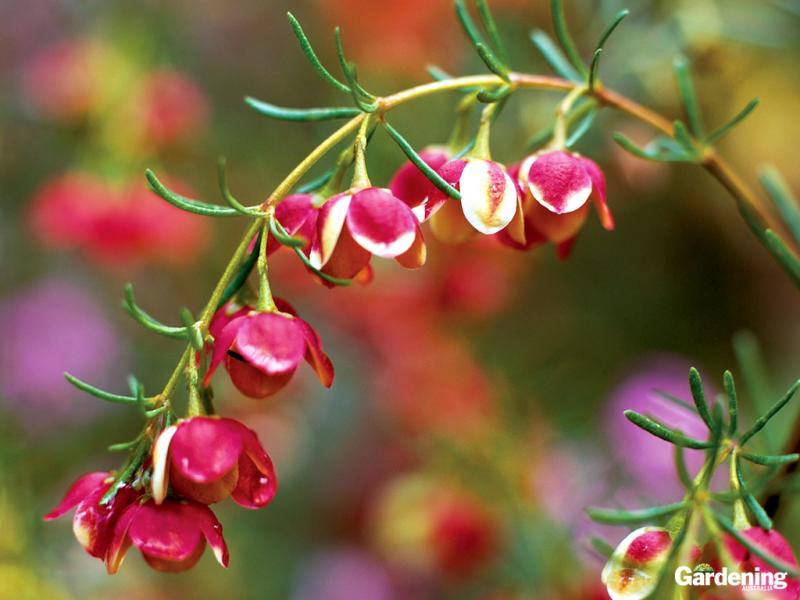
Unfortunately, I have not been able to work with boronia.  I've only been able to experience it's delicious aroma in perfumes, but have never gotten my hands on the raw material.  When I first smelled Aftelier's Boronia I wanted to drink it, bathe in it, roll in it, rub it all over my body!  It's so stunning, I was at a loss for words.  If the color gold had a scent it would be boronia.  This description seems overly poetic but it's all I can muster when inhaling.  I couldn't get enough.  I became a Boronia addict.  The initial scent was so stunning and so fleeting I wanted to constantly reapply the scent so I could inhale it's aroma again and again.  I recently found boronia absolute listed for sale at nearly $200.00 for 5 ml.!!!  That's 1/6th of an ounce people.  Apparently my comparison of boronia to gold isn't far off.  At this price, I'll sadly have to keep my addiction to boronia at bay.

Boronia Flowers

Another challenge I have experienced in creating "fruity" natural perfumes, is the definition of fruity.  This issue has it's roots in traditional synthetic perfumery.  What I might find fruity another finds grassy, or earthy or  . . . not fruity enough.  The public have been bashed over the head with potent chemical laden fruity scents in everything from deodorant (I kid you not, I saw a cranberry orange scented antiperspirant/deodorant at my local drugstore last week) to hairspray, never mind perfume.  Recently a co-worker requested that I bring in some perfumes from my line for her to sample.  I did and word spread quickly.  Before I knew it I was making a presentation to a group about natural perfumes, and my fragrance line.  I described one of my perfumes, Osmanthus Oolong as being a fruity floral with tea notes.  From experience, this is a scent that tends to be more popular with those unfamiliar with natural perfumes.  I consider it my crossover scent :)


begin scene, ACT 1

crowd gathers in giddy anticipation of smelling perfumes and escapism from monotonous office work

BLONDE FROM LEGAL DEP'T AKA "COUGAR" (sniffing perfume bottle) : "This is certainly . . .  different smelling isn't it?" 

group eyes each other warily

CO-WORKER IN POLYESTER PANTSUIT WITH A PENCHANT FOR BURNT MICROWAVE POP-CORN : "Hmm, this doesn't smell anything like my Bath & Body Works Juicy Raspberry body spray."  

the final coupe de grace posed innocently as a question . . . 

GUM POPPING GAL WHO HAS NEVER SPOKEN TO ME: "I wear Britney Spears Curious.  Whaddya have that smells like that?"

ME (horrified and pink cheeked):  "NOTHING!  I have nothing in my line that smells like that!"  

scene over, curtain closes, C'EST FIN

In conclusion, there are many methods and ingredients available for the natural perfumer to create fruit notes.  Experiment, tincture, blend, inhale.  Enjoy the triumphs and tribulations and the fruits of your labor!  

Tune in next week when I talk to Mandy Aftel, umm over the phone. Highlights include nervous blathering, mispronunciations of botanical ingredients, and escalating credit card bills.  I'll be sharing my reflections on a recent order of rare and exciting botanicals from Aftelier.  Included are: aged beeswax abs., insanely expensive Rum CO2, honeysuckle abs., agarwood, mint abs., and phenyl ethyl acetate (natural isolate)

Saturday, April 17, 2010

Hello, my name is Charna and I like fruity perfumes (judge me if you must)

PART 1: Fruit Tinctures

I've been thinking about fruity, frothy perfumes recently.  Spring has finally arrived in New England and the apple and cherry trees are blooming.  Recently, one sunny breezy morning, I found myself engulfed in a cloud of tiny circular apple blossom petals that swirled around me.  Delicate white petals fell softly on my eyelashes, temporarily blinding me and I was reminded of a spring "snowstorm" of petals.  The smells of the blossoms combined with new plants and flowers sprouting everywhere is subtly sweet, a fruity delicate scent with green overtones.  It is intoxicating.

Let me begin by saying I think fruity perfumes get a bad rap, and those who like these fruity scents are relegated to tweens, teenagers, thong-wearing "girls gone wild" types, and a few older women who drink white zinfandel because it's pink and sweet and wear too much eyeshadow.  (The stereotyping of the fruity perfume wearer comes from years of extensive research working as a bartender, and department store perfume salesperson.)

I will now admit the obvious: I too like fruity scents, or perhaps more to the point, fragrances with some fruity notes; hints of lemon, honey, or berries.  I am not a tween, teenager, girl gone wild, or middle-aged white zinfandel drinker (at least not yet . . . )  Perfume connoisseurs frown on these frothy concoctions, and indeed some are truly horrible.  Be Delicious by DKNYcomes to mind, as well as some Paris Hilton monstrosity I smelled in a magazine at the gym.  I promptly gagged and lost my footing on the treadmill causing an embarrassing lurch towards the treadmill next to me, which was --of course-- occupied by a fit male runner who gave me the evil eye for disrupting his perfect jogging rhythm.  I wanted to yell loud enough so he could hear me over his ipod, "IT WASN'T MY FAULT.  IT WAS THIS DISGUSTING MAGAZINE SCENT-STRIP!"  Luckily, I restrained myself and went back to my leisurely walking pace and informative Us Weekly magazine perusal.

Creating fruity notes for natural perfumes can be a bit more difficult.  After all, there's no such thing as strawberry essential oil.  Natural perfumers must work a bit harder to create these notes and this challenge is the very thing I love about natural perfumery. One of my favorite methods of creating a fruit note for natural perfumes is through tincturing freeze dried fruit in perfumers alcohol.  One can use high proof grain alcohol such as everclear or organic grape alcohol which is a bit fruity to begin with but unfortunately expensive.  Add some freeze dried fruit from a company such as Just Tomatoes to the alcohol, cover and allow to tincture for a few weeks or months even.  It takes a good amount of fruit to create these tinctures.  Depending on the volume you wish to make, I recommend obtaining the freeze dried fruit from amazon.com where it can be purchased in larger size tubs economically.  I make mine in large mason canning jars.  Shake periodically.  Remove the fruit, and add more repeating the process until the tincture is fruity enough.

I've tried tincturing: apricots, peaches, raspberries, strawberries, mangos and asian pears.  In my opinion, mangos, apricots and strawberries work the best.  These fruits tincture easily and smell true to the fruit.  The asian pear tincture was a bust and smells oddly of raw potatoes.  It has a starchy, brown paper bag like scent.  The raspberry tincture is bright fuchsia colored, and tart.  Currently the raspberry tincture smells more like black currant bud than ripe raspberries. Perhaps it will take on a raspberry aroma after many more raspberries have been added and the strength of the tincture is increased.  The peach tincture is lovely, however the apricot tincture smelled peachier.

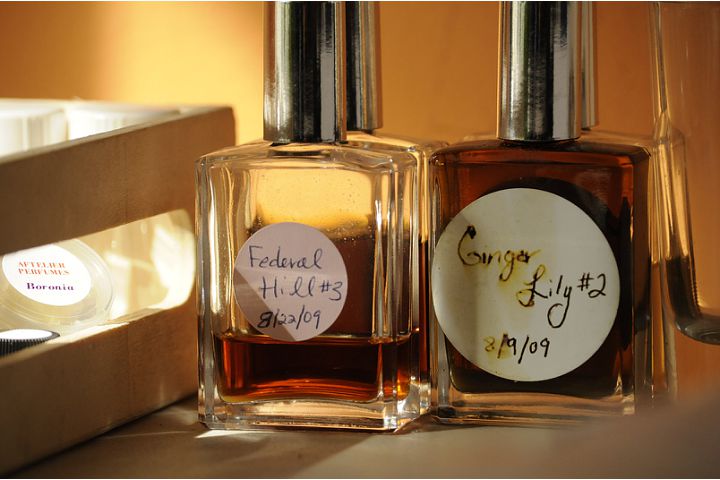
Using these tinctures as a component of a natural perfume creates a marked difference.  The fruit seems to appear as a top note and base note which is unusual.  These tinctures can be used to varying degrees in perfume blends and don't necessarily make the final scent fruity.  They can enhance florals, smooth rough or sharp edges in blends and generally round out a perfume.  Try rose absolute in strawberry tincture, it's amazing, sweet and rose colored!  Osmanthus in apricot tincture go hand in hand.  When I was perfecting my Ginger Lily perfume I made many, many variations.  Once I added mango tincture to the blend it was magic.  It had such a marked effect on the perfume I carried around vials with two versions of the perfume in my purse.  They were identical, except one used mango tincture.  I was constantly having friends and family smell both versions while I hissed wild eyed, "Isn't it amazing?  Can you smell the difference? Smell it?"  I got a lot of positive feedback from the mango enhanced version of Ginger Lily, but it could be they were a bit frightened.

Pictured above are peach and apricot tinctures


apple blossoms

I will be posting the second part of the fruity perfume series within the next few days focusing on natural botanicals with sweet fruity notes.  Look for PART 2: Creating fruity notes with essential oils and absolutes.